
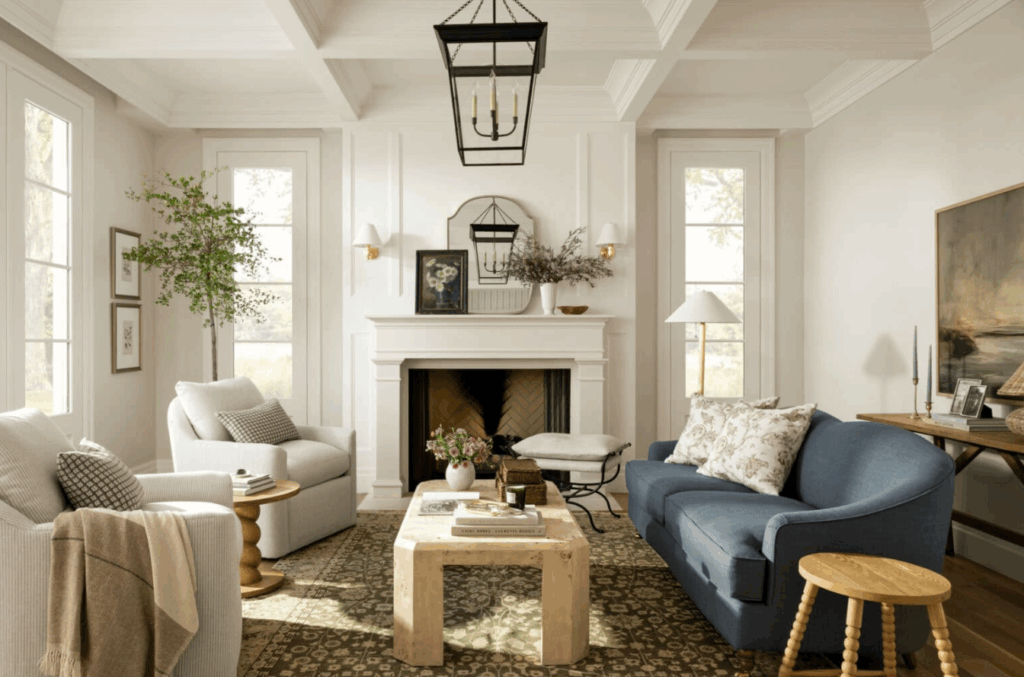
Art has the power to transform a house into a home. From bold statement pieces to subtle accents, wall art creates personality, adds warmth, and reflects your style. Hanging artwork is one of the easiest and most impactful ways to elevate your home décor, but hanging art isn’t just about putting a frame on the wall—it’s about creating balance, harmony, and impact within your space.
At Wizlah, we believe every detail counts in design. Here’s a step-by-step guide to hanging art beautifully in your home.
1. Find the Right Height
The golden rule of hanging art is to place the center of your piece at eye level.
- The standard is about 145–150 cm from the floor to the center of the artwork. This measurement—roughly eye level for most people—creates a balanced and visually pleasing focal point. Maintaining this standard art hanging height ensures consistency and flow from room to room.
- When you’re hanging art above furniture—like a sofa, console, bed, or dining bench—the goal is to create visual connection and balance between the piece and the items below. Position the bottom edge of the frame about 15–20 cm above the top of the furniture to maintain a cohesive visual relationship.
2. Size Matters
Scale is everything when it comes to art.
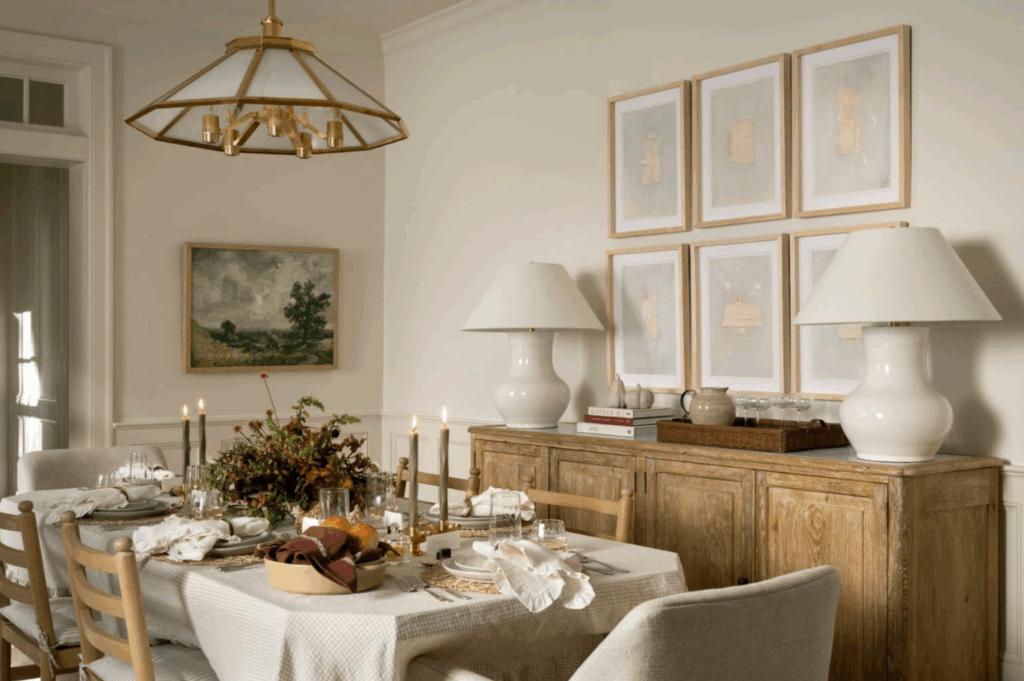
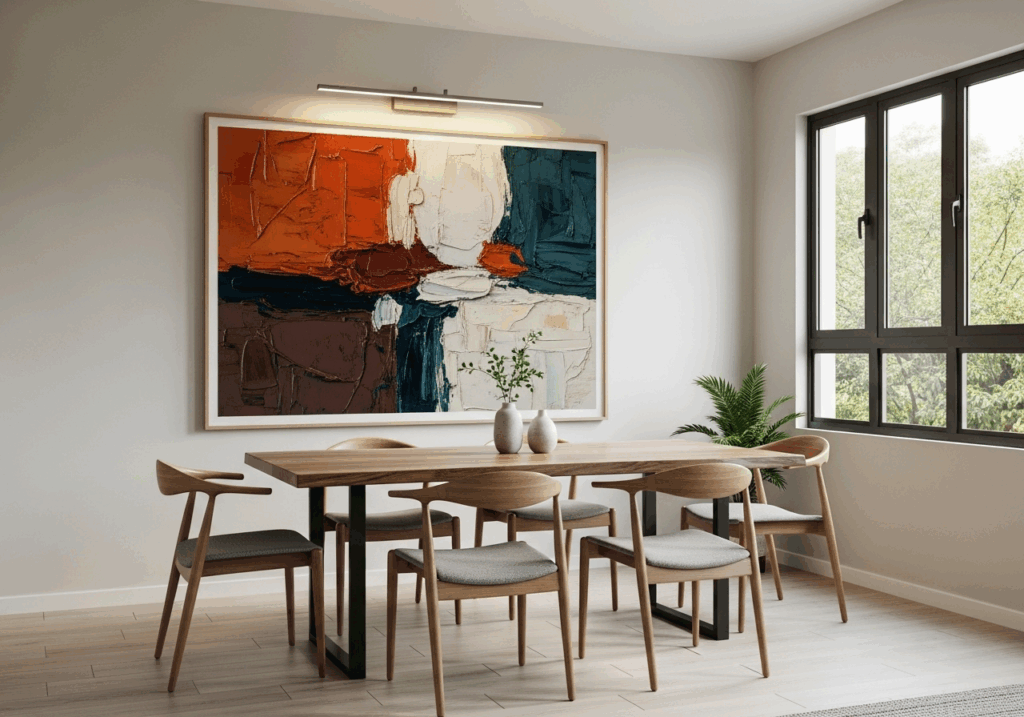
- Large wall, large art: Don’t be afraid of oversized pieces— A single oversized piece often creates drama and fill negative space.
- Gallery walls: Combine smaller pieces for an architectural feel, but always keep them within a cohesive arrangement.
- Over furniture: A common rule of thumb is to choose artwork (or a grouping) that spans approximately two-thirds the width of the furniture. This proportion helps the art feel integrated rather than floating or disconnected.
3. Create a Gallery Wall
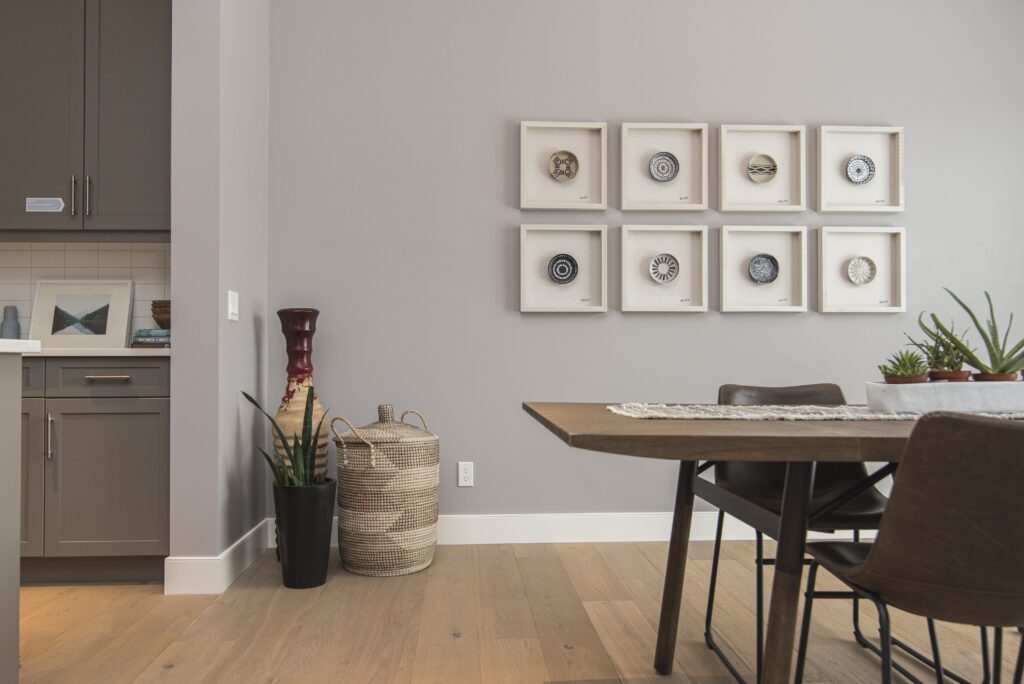
A well-designed gallery wall can be a show-stopping feature in any room, but the key to pulling it off is intentionality—both in layout and in the art itself.
- Start with a theme (e.g., black-and-white photography, abstract art, or family portraits).
- Lay pieces on the floor or sketch a plan on paper first to test your arrangement.
- Keep spacing consistent—around 5–8 cm apart for balance.
- Mix frame sizes but keep a unifying element, like similar colors or matting.
4. Choose the Right Wall
Not every wall needs art—choose wisely.
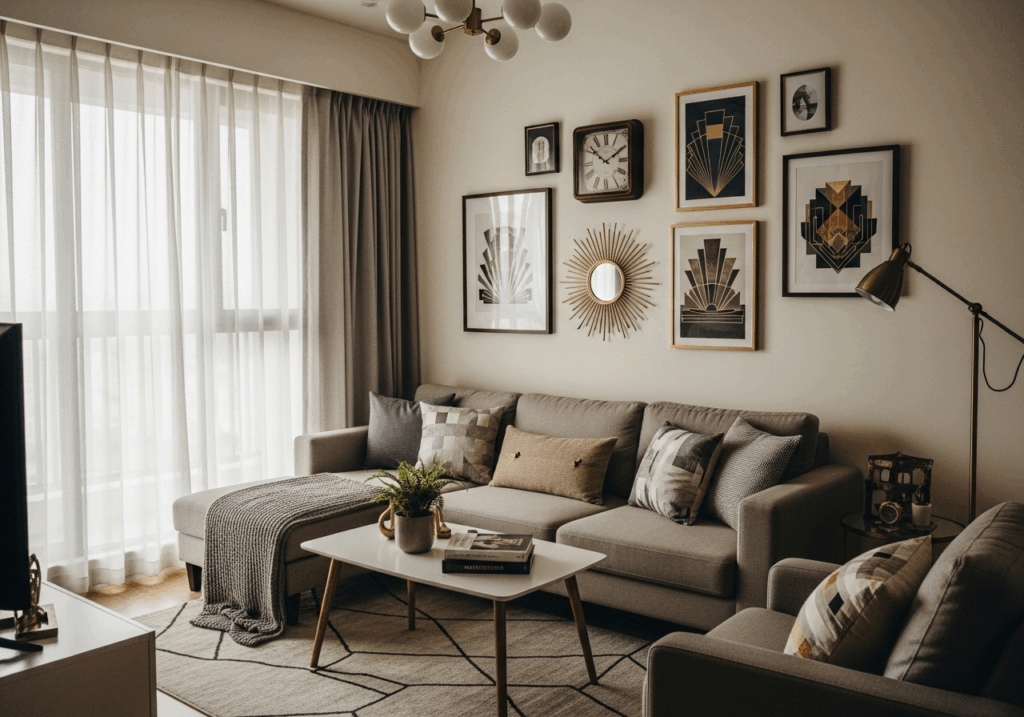
- Living room: Above the sofa, TV console, or opposite windows.
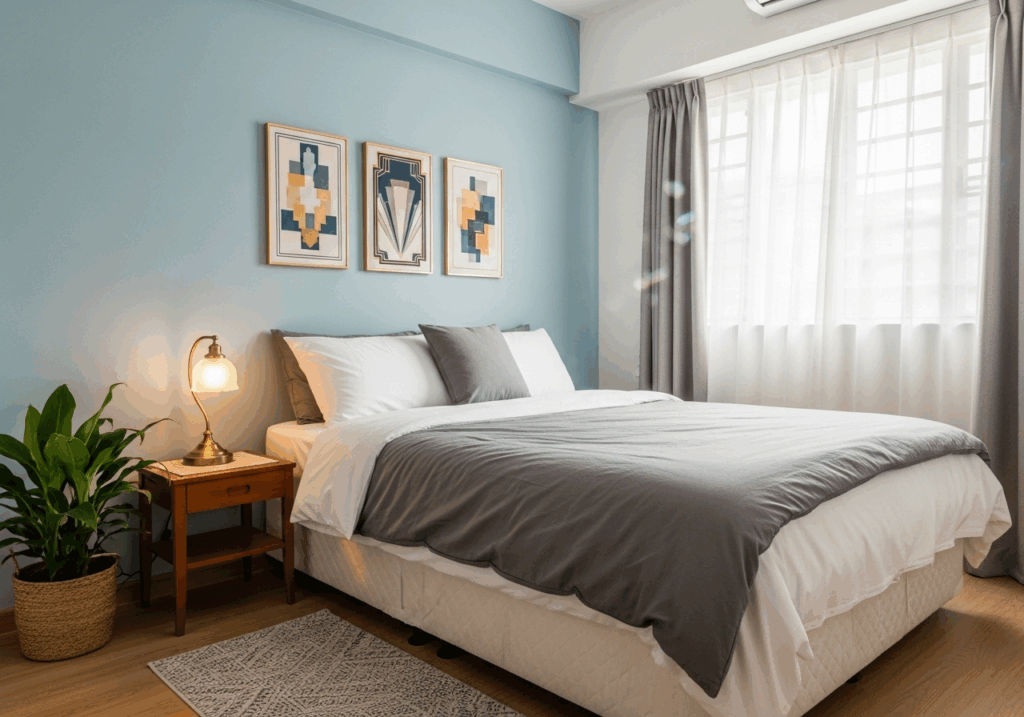
- Bedroom: Above the headboard for calm and focus.
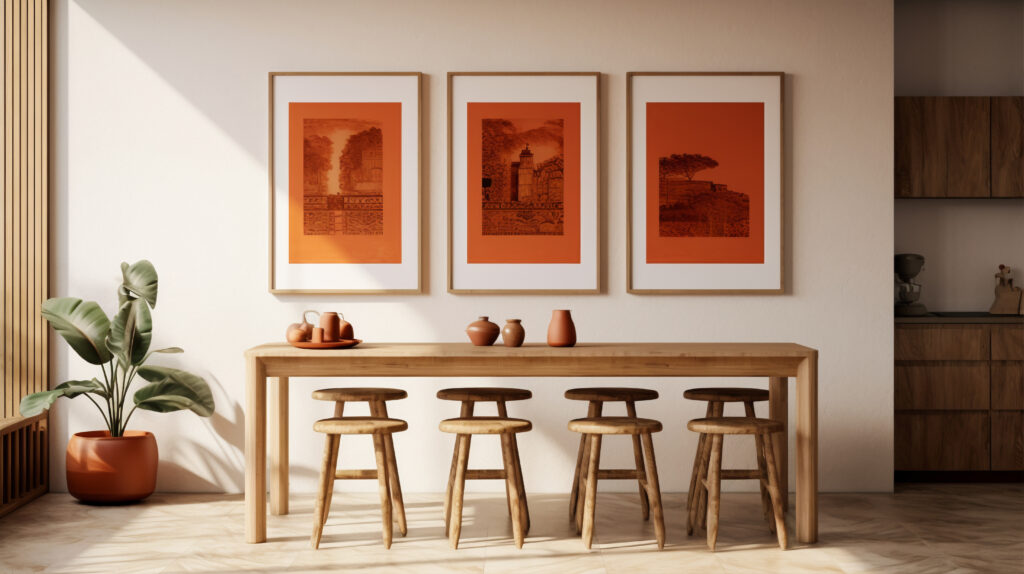
- Dining area: Centered along the main wall to anchor the space.
- Hallways/Entryway: Great for vertical pieces or smaller art series.
5. Balance Color & Mood
Your art should complement the room’s palette and atmosphere.
- Bright, bold pieces for lively spaces like living rooms.
- Soft, muted art for bedrooms to create relaxation.
- Neutral or monochrome art works well in minimalist or Scandinavian spaces.
6. Use Lighting Smartly
Don’t overlook the power of picture lighting. Adding a picture light—whether hardwired or battery-operated—instantly enhances your display by spotlighting the piece and adding depth and character. It’s a great way to bring a designer look to your wall decor, especially for artwork that’s meaningful or serves as a visual anchor in the room.
7. You Don’t Always Have to Hang It
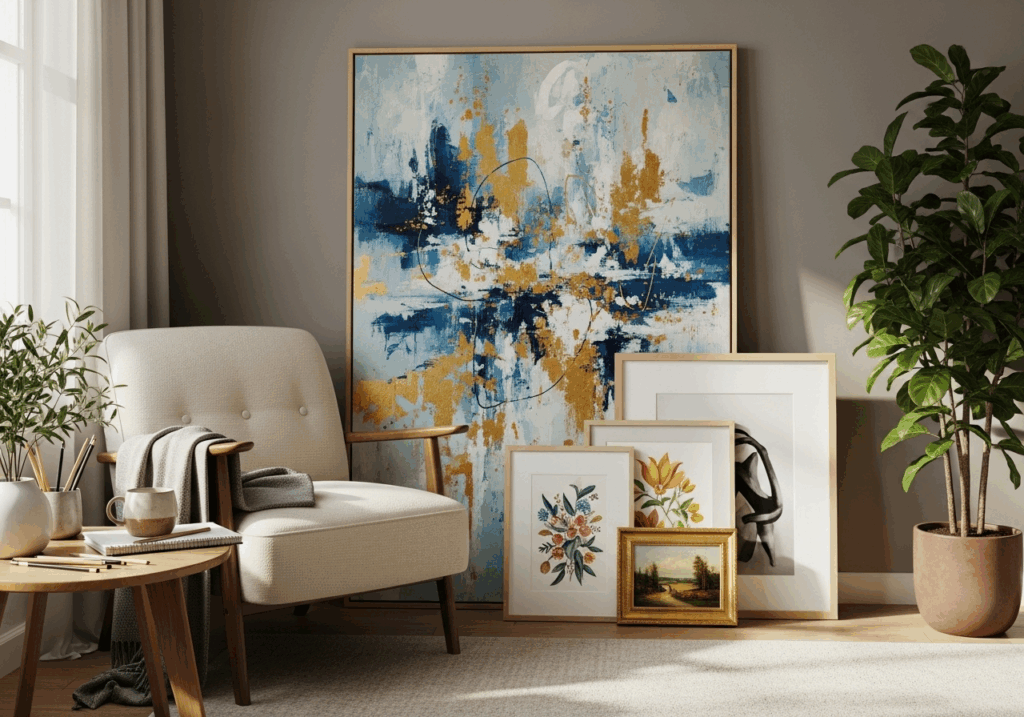
Not all art needs to hang! In fact, some of the most layered and lived-in looks come from styling art in unexpected ways
- Lean framed art against a wall on consoles or shelves for a casual, modern look.
- Layer smaller pieces in front of larger ones to add depth.
Final Thoughts
Hanging art is both a science and an art form. With the right height, scale, and arrangement, your walls can come alive with personality and style. And with Wizlah, you can preview how your favorite art looks in your space in 3D—so you’ll never have to guess if it’s the right fit.
📲 Ready to design your dream walls? Try it now at www.wizlah.com